

Most people searching for questions to ask before buying a franchise are looking for a checklist. There are plenty available, and many contain useful information. The problem is that a list of forty questions doesn’t necessarily tell you which ones matter most or who is best qualified to answer them.
The franchisor can explain its business model, training, and support. Existing franchisees can tell you what operating the business is actually like. The FDD provides important information in writing, while your professional advisers can help you understand the financial and legal considerations.
Some of the most important questions, however, are the ones you need to answer yourself.
After years of working with business buyers and prospective franchise owners, I’ve found that choosing the right franchise has less to do with finding the most recognizable brand and more to do with finding a business that fits your goals, finances, abilities, and lifestyle.
This guide organizes the questions to ask before buying a franchise into five sources so you know where to look for reliable answers and how to compare what you learn.
1. Questions to Ask Before Buying a Franchise, Starting With Yourself
Before discussing brands, territories, or potential earnings, I like to begin with a question that often gets overlooked: How many months could your household comfortably go without a paycheck from the business?
I’m not referring to the money you’ve set aside for the initial investment. I’m talking about the savings available to support your household while the business becomes established. A franchise may take time to generate sufficient cash flow to pay its owner, and that timeline varies considerably by concept, location, and operating conditions.
Your financial runway is only one part of the decision. Before exploring specific opportunities, consider the following questions.
What kind of owner do I want to be?
Do you want to operate the business yourself, hire a manager to oversee daily operations, or eventually own multiple locations? Each model comes with different responsibilities, capital requirements, and levels of involvement.
How much capital am I comfortable putting at risk?
Determine what you can invest without jeopardizing your household’s financial security. Include the initial investment, additional working capital, and personal financial obligations.
Does my family support the decision?
Business ownership affects more than the person signing the agreement. Your schedule, finances, and responsibilities may change, particularly during the first year. Make sure the people closest to you understand what you’re considering.
What am I hoping business ownership will accomplish?
Some people want greater control over their careers. Others are interested in building equity, creating additional income, or developing a business they can eventually sell.
Being unhappy with your current job may motivate you to explore ownership, but it shouldn’t be the only reason you invest.
I encourage prospective buyers to write down their answers before speaking with franchise brands. Those answers become the criteria against which every opportunity should be evaluated. The goal is to find a franchise that fits your circumstances, not to adjust your circumstances to fit a franchise.
2. Questions for the Franchisor
The franchisor’s development team understands its system and can explain how the business operates. It can also provide information about training, support, territories, and the investment process.
Keep in mind that franchise development representatives are also responsible for recruiting qualified franchisees. Their information is valuable, but important answers should be verified through the FDD and conversations with existing owners.
What does the total investment include?
Ask the franchisor to walk you through Item 7, including the initial franchise fee, equipment, real estate, inventory, opening expenses, and estimated additional funds. Find out which costs are most likely to exceed the estimates.
What ongoing fees will I pay?
Item 6 outlines royalties, advertising contributions, technology fees, and other required payments. Understand how these fees are calculated and how they affect your operating expenses.
What training and support will I receive?
Ask about initial training, opening assistance, marketing, ongoing operational support, and the resources available when problems arise. Find out who your primary contact will be after opening and how many franchisees that person supports.
How is my territory protected?
Item 12 addresses territorial rights and restrictions. Ask whether the franchisor can establish additional locations, serve national accounts, or make online sales within your territory.
How many locations have opened, closed, or changed ownership?
Item 20 provides information about changes in the franchise system. Ask the franchisor to explain significant closures, transfers, or terminations rather than focusing exclusively on new openings.
What happens if I want to sell the business?
Item 17 addresses renewal, termination, transfer, and related provisions. Understanding your exit options is important even if you expect to own the business for many years.
As you ask these questions, compare the explanations you receive with the written disclosures. A good franchisor should welcome thoughtful questions and help you understand both the opportunities and responsibilities associated with ownership.
3. Questions for Current and Former Franchisees
Speaking with existing franchisees is one of the most valuable parts of the evaluation process. These conversations, commonly called validation, show you what the business looks like once the presentation is over. A franchisor can describe its support system, but a franchisee can tell you how that support works when something goes wrong.
The FTC’s guide to buying a franchise encourages prospective buyers to talk with current and former franchisees, and the FDD lists them. Whenever possible, call owners you select yourself rather than relying only on the names the franchisor provides.
If you could do it again, would you buy this franchise?
This is one of my favorite questions. Listen to the whole answer, including any hesitation or qualifications. The pause before someone answers often tells you as much as the words that follow.
How long did it take before you could pay yourself?
Every location is different, but another owner’s experience can help you set realistic expectations for your own runway.
Was your actual investment close to the Item 7 estimate?
Ask where costs ran over, whether unexpected expenses came up, and how much additional working capital the owner needed before the business stabilized.
What does a typical week look like?
This matters most if you’re hoping to own the business with limited day-to-day involvement. Find out how much time the owner actually spends managing employees, serving customers, and handling operations.
How responsive is the franchisor when you need help?
Ask for a recent, specific example rather than a general impression.
What do you wish you had known before you signed?
This question often brings up information that never came up during the franchise presentation. For former franchisees, also ask why they left the system and whether they would make the same decision again.
Try to speak with owners at different stages, including newer operators and established franchisees in markets similar to yours. Ask similar questions in every conversation and take notes. One owner’s experience may be unusual, but a pattern that repeats across several calls deserves your attention. For a fuller set of questions and how to run these conversations, see what to ask on franchisee validation calls.
4. Questions the FDD Should Answer
Some questions are better asked of the document than of a person, because the FDD can’t adjust its answer to suit the conversation. Your conversations with the franchisor and its owners will cover Items 6, 7, 12, 17 and 20. A few other Items deserve close reading before you go much further:
- Item 3, Litigation. Look at the nature of any disputes, and especially whether franchisees have sued the franchisor and over what.
- Item 4, Bankruptcy. Required bankruptcy disclosures for the franchisor and certain associated individuals.
- Item 11, Franchisor’s Assistance and Training. What the franchisor is obligated to provide before and after opening, as opposed to what it usually does.
- Item 19, Financial Performance Representations. Not every franchisor provides one. If it does, ask how many outlets the figures represent, what period they cover, and whether they reflect the system as a whole. If it doesn’t, ask why.
- Item 21, Financial Statements. Review the franchisor’s financial condition with a qualified financial professional.
Under the FTC Franchise Rule, you must receive the FDD at least 14 days before you sign a binding agreement or pay any money to the franchisor or an affiliate. Some states add their own requirements. Use that review period fully, and have a franchise attorney, not a general business attorney, review the FDD before you sign.
5. Questions for Your Attorney, Lender, and Franchise Consultant
You don’t have to evaluate a franchise on your own. Each of these advisers sees a different part of the risk, so each deserves different questions.
Your franchise attorney
An attorney who regularly reviews FDDs knows what normal looks like and what deserves a closer look. Ask: What in this FDD would concern you if it were your money? What personal guarantee am I being asked to sign? What obligations continue if I sell or close the business?
Your lender or funding professional
If you’re financing the investment, look past the monthly payment. Ask how much cash you’ll need at closing, how much working capital you should keep in reserve, and what personal financial exposure you’re accepting. Whether you’re considering an SBA loan, a rollover of eligible retirement funds, or another route, each of the franchise funding options carries its own requirements and risks. Your financing should support your overall plan, not stretch it.
Your franchise consultant
If you work with a franchise consultant, including me, ask how that person is paid and how the brands you’re shown were chosen. Which brands do you work with? Why are you showing me these and not others? What happens if none of them fit? Will you tell me to walk away if an opportunity doesn’t make sense?
In my practice, there’s no charge to candidates. Franchisors pay a placement fee, which is explained in more detail in how franchise consultants get paid. That means I have no reason to favor any particular brand. My focus is the right fit for you and for the franchisor, and sometimes that means helping someone recognize that a franchise isn’t right for them, or that the best decision is not to buy one at all.
The Answers That Should Make You Pause
As you work through the questions to ask before buying a franchise, pay attention to how people respond as well as what they say. Do they welcome thoughtful questions? Will they provide documentation? Do their explanations stay consistent from one conversation to the next? A few warning signs deserve extra attention:
- Pressure to commit or put down a deposit before you’ve finished your due diligence.
- Earnings claims made in conversation that aren’t supported by Item 19.
- Significant closures or transfers in Item 20 without a satisfactory explanation.
- Difficulty reaching current or former franchisees.
- Vague promises about training, support, or profitability.
- An investment that exceeds your comfort level, or an ownership model that doesn’t match the lifestyle you want.
One concern doesn’t automatically make a franchise a bad opportunity. But unanswered questions, inconsistent information, or repeated warning signs are reasons to slow down. You’re not simply buying the right to use a brand name. You’re entering a long-term business relationship, and you should be comfortable with both the opportunity and the people behind it.
Turn the Questions Into a Written Record
As you compare opportunities, it’s surprisingly easy to forget which brand gave which answer. One may offer stronger training, another a lower initial investment, a third a model that better fits your lifestyle. Without a consistent way to record what you learn, the decision can drift toward whichever presentation you saw most recently.
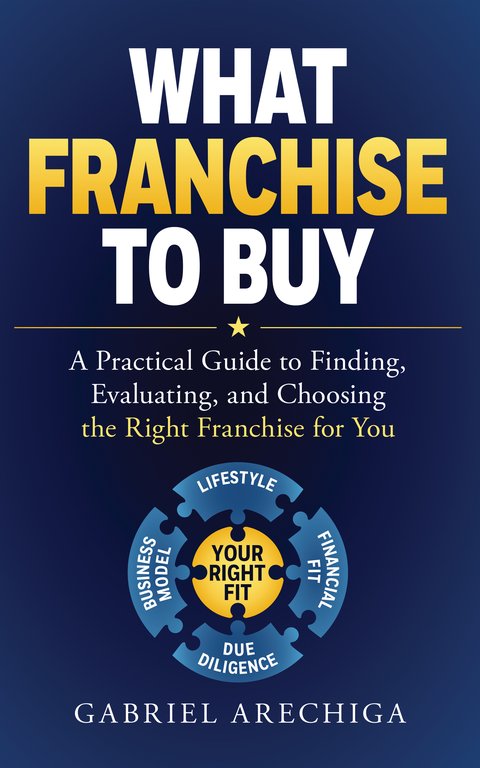
That’s one reason I wrote What Franchise To Buy: A Practical Guide to Finding, Evaluating, and Choosing the Right Franchise for You. The book walks through the whole process, from setting your personal goals and financial boundaries to comparing business models and completing due diligence, and it includes nine worksheets for organizing your research. Several support the questions in this article directly: the Franchise Buyer Profile, the Financial Capacity Worksheet, the FDD Review Checklist, the Franchisee Validation Interview Worksheet, the Red Flag Checklist, and the Discovery Day Question and Evaluation Worksheet.
You can download all nine as one printable PDF from the Franchise Buyer’s Toolkit. The right franchise should make sense on paper as well as in conversation.
Keep Reading
- What to expect at a franchise discovery day: what happens when you meet the leadership team, and which questions to bring
- Mistakes to avoid when buying a franchise: the ones that cost buyers the most, and how to avoid them
- Franchise fees and royalties: what you’re paying for, and how ongoing fees affect your business
Ready to Talk It Through?
If you’re considering franchise ownership, or you’ve already narrowed your search to two or three brands, I’d be glad to talk. We can go over your goals, the ownership models you’re weighing, and the questions that still need answers. If you’re comparing brands, I can give you a second perspective on how they line up with what you want.
I don’t provide legal advice or review FDDs. That’s your franchise attorney’s role. There’s no charge for my guidance and no obligation to move forward with any franchise. Sometimes the best next step is simply a clearer picture of your options.
Schedule a 15-minute conversation
Frequently Asked Questions
What is the most important question to ask before buying a franchise?
One of the first questions I recommend is how long your household could comfortably go without income from the new business. Understanding your financial runway helps you judge whether a franchise investment fits your circumstances. Your ownership goals, available capital, risk tolerance, and desired lifestyle matter too.
Who should I ask about a franchise besides the franchisor?
Current and former franchisees, a franchise attorney, your lender or funding professional, and a franchise consultant if you’re working with one. Each sees the opportunity from a different angle, and the FDD lists current and former owners so you can choose whom to call.
How long do I have to review the FDD?
Under the FTC Franchise Rule, the franchisor must give you the FDD at least 14 days before you sign a binding agreement or pay any money to the franchisor or an affiliate. Some states add their own requirements. Use that time to study the FDD, speak with franchisees, and have a franchise attorney review it.
What should I ask existing franchisees?
Ask whether they would buy the franchise again, how much they actually invested compared with Item 7, how long it took to start paying themselves, what a typical week looks like, and how responsive the franchisor has been. Also ask what they wish they had known before signing.
What if the franchisor won’t answer a question?
First check whether the FDD addresses it, and whether legal rules limit what the franchisor can say, as they do with earnings claims outside Item 19. If an important question is still unanswered, ask for clarification and raise it with your franchise attorney. Don’t let pressure or an artificial deadline take the place of proper due diligence.