
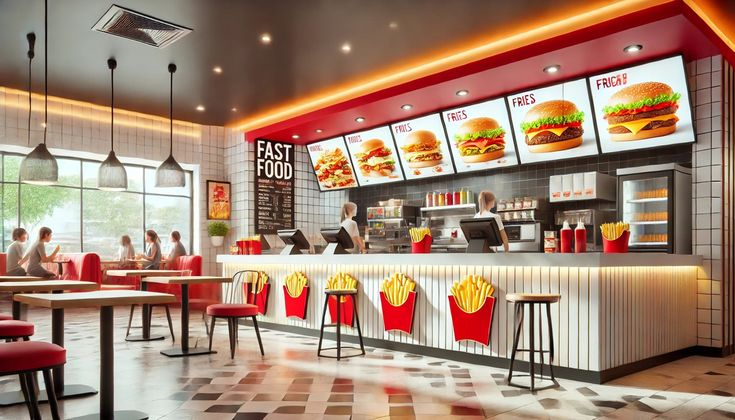
Food franchises remain attractive because eating out is not a fringe habit in the United States. It is woven into workdays, family routines, travel, celebrations, convenience culture, and late-night decisions made with very little dignity and a lot of appetite.
The U.S. restaurant industry is projected to reach $1.55 trillion in sales in 2026, according to the National Restaurant Association, with real inflation-adjusted growth also expected.
For investors, that makes the food sector worth serious study. Fast-casual dining, delivery, drive-thru, and QSR models continue to shape how customers choose where to eat. Still, choosing the best food franchises to buy is about understanding demand, costs, margins, location, and support. If you are asking what franchise to buy, the food industry offers many paths, but each one comes with a different operating reality.
What Franchise to Buy – Key Factors to Consider
The phrase what franchise to buy sounds simple, but the real answer depends on your money, market, and management style.
Start with the total investment. Franchise fees are only one piece. You also need to review equipment, buildout, rent, signage, inventory, payroll, training expenses, insurance, working capital, royalties, marketing fees, and technology costs.
Next, study brand reputation and demand. A famous name helps, but it does not save a weak location or poor execution. Urban areas may reward compact stores, late hours, delivery strength, and fast service. Suburban areas may favor drive-thru, family meals, parking access, and catering.
You should also compare franchisor support. Strong training, supply chain strength, marketing support, site selection guidance, and operating systems can make a major difference. In a crowded restaurant market, the system behind the brand matters just as much as the logo above the door.
Best Food Franchises to Buy in the United States
- Fast Food Franchises
Fast food franchises remain a major category because they focus on speed, price, habit, and convenience. Burger, chicken, sandwich, taco, and drive-thru models can perform well when the location and traffic flow are strong.
- Pizza Franchises
Pizza remains one of the strongest food franchise categories because it works across dine-in, takeout, delivery, group meals, school events, office lunches, and family nights. It also travels better than many restaurant foods, which helps with delivery and pickup.
Pizza can offer strong repeat demand, especially in suburbs, college towns, and dense residential areas. The model can also support catering and high-ticket group orders. Investors should compare delivery systems, kitchen efficiency, ingredient costs, and local competition before choosing a brand.
- Coffee and Beverage Franchises
Coffee and beverage concepts are habit businesses. A strong location can bring customers back daily or several times a week. Coffee, tea, boba, smoothies, juices, and energy drinks all fit the lifestyle-driven side of franchising.
The biggest factor is convenience. Morning traffic, drive-thru access, mobile ordering, parking, and speed can heavily influence performance. Beverage franchises may also require less kitchen complexity than full food concepts, though rent and labor still matter.
- Healthy Food Franchises
Health-focused concepts are growing because many consumers want quick meals that feel lighter, fresher, or more aligned with wellness goals. Salad bars, grain bowls, smoothies, vegan concepts, organic menus, and protein-focused meals can work well in markets with strong health-conscious demand. These concepts often depend on freshness, supply chain consistency, and a customer base willing to pay for quality ingredients. Location fit is critical.
- Dessert and Ice Cream Franchises
Dessert franchises can be attractive because they often sell joy in a cup, cone, box, or dangerously persuasive cookie bag. Ice cream, frozen yogurt, donuts, cookies, shaved ice, and specialty sweets can do well in family markets, tourist areas, malls, entertainment districts, and high-foot-traffic locations.
Some dessert concepts are seasonal, so investors should review year-round demand, add-on sales, event catering, and local climate.
Investment Range for Food Franchises
Food franchise costs vary widely. Lower investment concepts, often around $50,000 to $150,000, may include kiosks, mobile units, small dessert concepts, or lean beverage models. Mid-range options, roughly $150,000 to $500,000, may include small storefronts, fast-casual restaurants, and some delivery-focused concepts. Larger QSR or premium brands can exceed $500,000, especially when drive-thru buildout, major kitchen equipment, real estate, and staffing are involved.
Pros and Cons of Food Franchise Ownership
Food franchises offer clear advantages: proven systems, brand recognition, training, supply chain support, marketing assets, and repeat customer potential.
The challenges are just as real. Franchisees may face royalties, required marketing contributions, limited menu freedom, labor pressure, food cost fluctuations, rent increases, and competition from both local restaurants and other franchise locations.
The smartest investors do not romanticize the category. They study the numbers first and the menu second.
How to Choose the Right Franchise for You
Start by matching your budget with the opportunity. Then review local market demand, customer demographics, traffic patterns, competition, and site availability.
Read the Franchise Disclosure Document carefully. Speak with existing franchise owners. Ask about actual operating challenges, staffing, margins, franchisor support, and whether they would buy the same franchise again.
Long-term growth also matters. Some concepts are better for single-unit ownership. Others are built for multi-unit expansion. Your choice should match your goals, available capital, and tolerance for daily operations.
So, Is a Food Franchise Worth It?
A food franchise can be worth it when the brand, location, numbers, and owner fit come together. The food sector has enormous demand, but it also has sharp competition and tight operational demands.
If you are comparing the best food franchises to buy, slow down and study the business behind the brand. The right choice should make sense on paper before it feels exciting in person.
At What Franchise To Buy, we help you explore franchise opportunities, compare categories, and get clearer research guidance before you make your investment decision.
Frequently Asked Questions – FAQs.
What franchise to buy for beginners?
Beginners may want to consider simpler operating models with strong training, lower staffing complexity, and clear systems. Coffee, dessert, small fast-casual, or takeout-focused concepts may be easier to manage than larger full-service models.
How much does it cost to start a food franchise in the U.S.?
Costs vary widely. Some small concepts may start around $50,000 to $150,000, while larger QSR brands or premium restaurant franchises can exceed $500,000 depending on location, equipment, buildout, and brand requirements.
Which food franchise is most profitable?
Profitability depends on rent, labor, food costs, royalties, location, management, and demand. Pizza, coffee, fast food, and high-volume QSR concepts can be profitable when the economics and operations are strong.
Are food franchises a safe investment?
No franchise is risk-free. Food franchises offer brand systems and repeat demand, but owners still face competition, cost pressure, staffing challenges, and market risk. Smart research reduces surprises.